
 Ely Area, Arrowhead Outdoors Fishing Report September 9, 2026
 Walleye Fishing
With water temps still getting into the 70's, night crawlers continue to be the bait of choice for walleye anglers this last week. Spinner rigs tipped with crawlers and fished around sunken islands in that 15 to 30 foot depth range continue to be the most popular approach. Trolling out in the basins, also in that 15 to 30 feet of water range also has remained very effective this last week. Perch, orange and gold continue to be hot colors
Smallmouth Bass
Smallmouth bass fishing continues to go strong this last week and smallies are really starting to put the feed bag on, trying to fatten up for winter. Soft plastics, in particular crawfish color, have been red hot for bass anglers. Drop shooting and Ned rigging continue to be a very popular choice for those anglers fishing with forward facing sonar. Paddle tails, square bill crankbaits, in line spinners and spinnerbaits are all also catching their fair share of smallies.
Sunken islands are quickly becoming the best place to find the biggest numbers and size of smallies. Sunken islands that top out in that 10 to 20 feet of water are typically the best ones.
Panfish Fishing
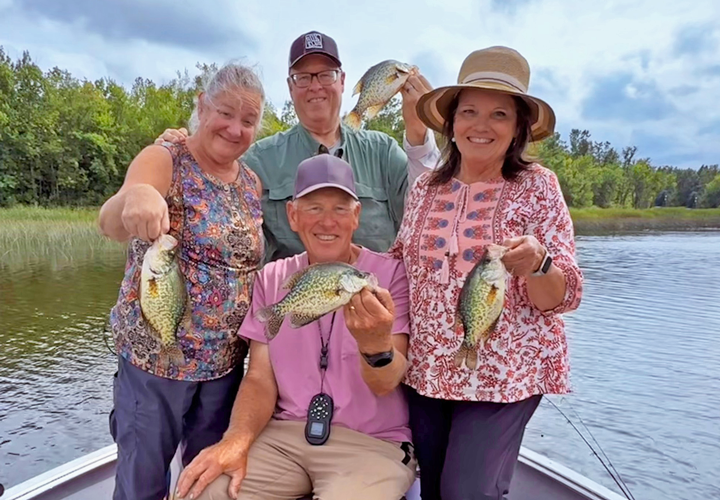
Crappie anglers enjoyed another good week targeting crappies. Crappies continue to be found in and around weedbeds this last week, but as weedbeds start to brown up, crappies will be spending less time in the weedbeds during the day. That last hour of daylight continues to be the best time to target crappies. Anglers continue to have good luck throwing beetle spins and jig/twisters during the evenings.
Northern Pike Fishing
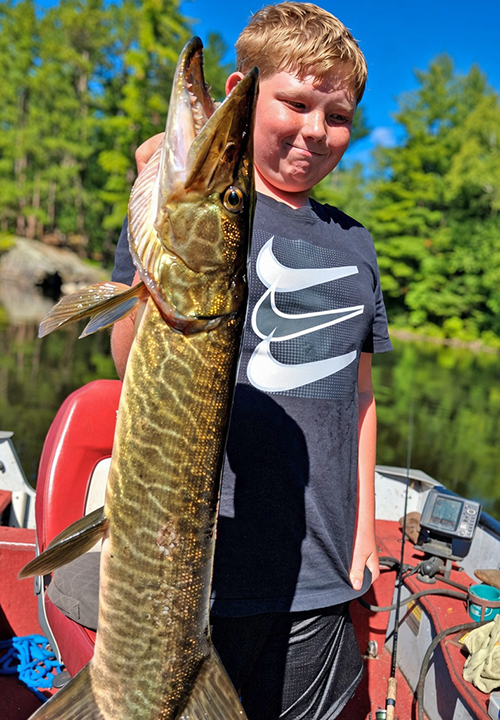
Anglers are starting to see big pike starting to show up in shallow water pike spots again. As water temperatures continue to cool off, the pike fishing should really start picking back up. Big creek chubs or suckers, if you can find them, fished under a bobber have been very effective and will only going to get better. Anglers looking to throw lures have been having good luck with large spoons and swimbaits around weedlines or river mouths that have deep water close by.
Stream Trout Fishing
Stream Trout anglers also continue to catch good numbers and sized stream trout this last week. Shore anglers continue to catch quality rainbows this last week while floating a night crawler under a bobber about 5 to 15 feet down, particularly during those evening hours and after dark. Boat anglers continue to troll with leadcore and small, brightly colored crankbaits about 20 feet down, over 30 to 80 feet of water." — Arrowhead Outdoors, 218-365-5358
Lake of the Woods Fishing Report September 9, 2026
 "It was a special week on Lake of the Woods. Lots of great fishing occurred, including two events that brought anglers together. The 13th Annual Pay It Forward Veterans Event on the south end and the Max multispecies fishing tournament as part of Buoy Bash up at the NW Angle. Here's a look at the three areas this week.
Big Traverse Bay South Shore
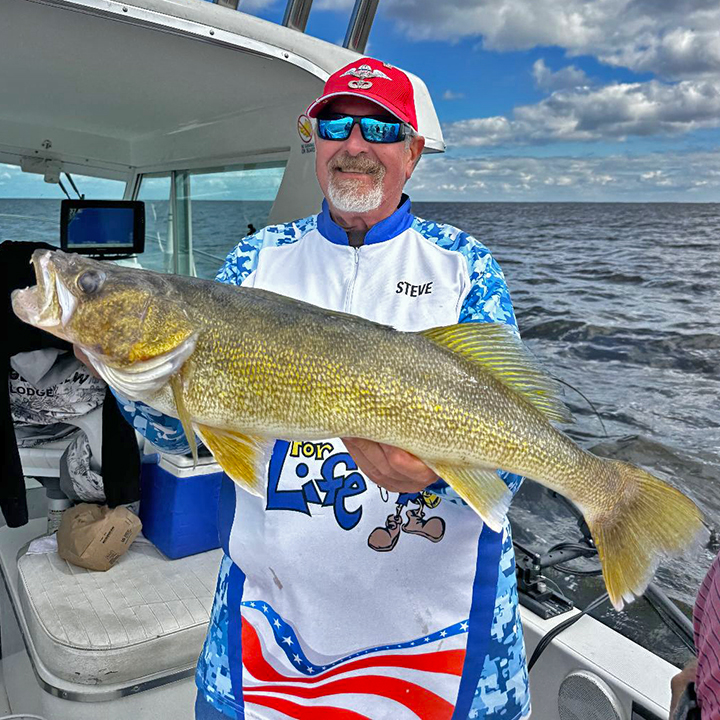
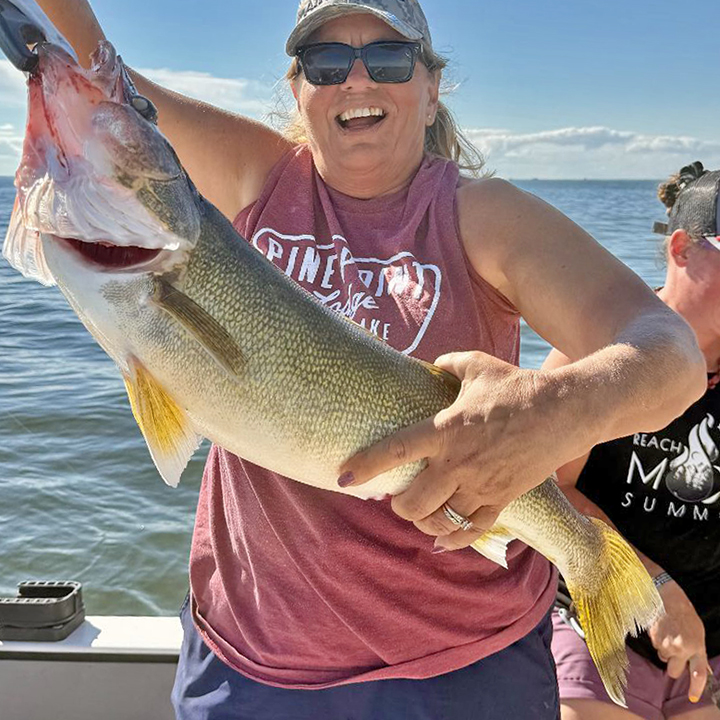
The south end of Lake of the Woods played host to the Pay It Forward Veterans Event this past week, and it was a great few days to remember. Ninety-nine participants boarded charter boats for two straight days and enjoyed some great walleye fishing. As a rule, limits were caught, along with a number of trophy walleyes as big as 29.5 inches. We owe our veterans so much, and we sincerely appreciate the generosity of the many Lake of the Woods resorts and sponsors who made this 13th annual veterans event happen.
The fishing itself followed the productive pattern that's carried the season. Most charters were drifting or slow-trolling (when there was no wind) spinners and crawlers. Strong blade colors included five of diamonds, firetiger, and gold with red or pink. A few boats worked the basin trolling crankbaits behind downriggers, and they did well too, covering water and putting their cranks in front of thousands of walleyes. It only takes a small percentage of those fish to react, and by the end of the day, the fish cooler looks pretty darn good.
Rainy River
The Rainy River continues to serve up a mixed bag, and there's more on the way. As the water cools, the fall run of emerald shiners up the river is beginning to build, and the walleyes won't be far behind. Big schools of emerald shiners running up the river sets the table for the epic fall walleye run the river is known for. For some who have experienced this fall run in the past, it is one of the most anticipated bites of the season, and it's getting closer each week.
 As the waters continue to cool and the days get shorter, lake sturgeon activity will start increasing as well. Fall is a time when the sturgeon bite really turns on.
Nortwest Angle
Up at the Angle, the Max multispecies derby, held as part of the Northwest Angle's Buoy Bash, turned up some outstanding fish. In this two-day tournament, which combines a team's top muskie and top walleye each day.
Anglers put up some very nice muskies, many between 45-to- 49.5 inches, along with big walleyes up to 28.5 inches. It's a great snapshot of just how strong the Nortwest Angle part of the lake continues to be. Muskie activity will continue to increase as fall approaches. Fall is a prime time to fish among the islands.
A quick reminder on the regulations. The combined walleye and sauger limit is 6 fish total, with up to 4 being walleyes. All walleyes between 19.5 and 28.0 inches must be released immediately, with one walleye over 28.0 inches in posession allowed. A 2026 Minnesota fishing license is required.
With the jig bite and the river's shiner run both on the horizon, fall is shaping up to be a fantastic time on Lake of the Woods. There's still plenty of open-water season left to enjoy, so plan your trip, come on up, and make some memories." — Lake of the Woods Tourism, (800) 382-FISH
 September 8, 2026 "Sundin's Busman's Holiday Fishing Report"
 I mentioned on Saturday that my brother Gary and my sister-in-law Cyndee were coming up to help us relax over the Labor Day holiday. I predicted too that at some point, we’d be on the lake and yesterday, fishing for panfish, that prediction came to life.
These things couldn’t be rushed, so we took our time and rolled out the door around 11:00 AM. The outside air temperature at the time was about 76 degrees; it was a little muggy and the sky was partly sunny. Nobody even thought about wearing jackets, rain gear or the like.
On our way to the lake, conversation turned to the date September 8, 2020, Gary and Cyndee’s wedding date. Gary recalled the contrast between conditions then, vs conditions now. On that date, the weather at Lake Mille Lacs was not friendly, the wind was blustery and the air temperature was cold. The wedding party canceled their scheduled boat ride on the Twin Pines launch and hunkered down inside the lodge. Going fishing was the last thing anybody was thinking about.
Okay, we knew that we’d be comfortable on the lake, but we didn’t know if we’d catch anything. As it happens, we did catch something, in fact, the action was pretty good. But the presentations we used were different than I planned for or expected to use.
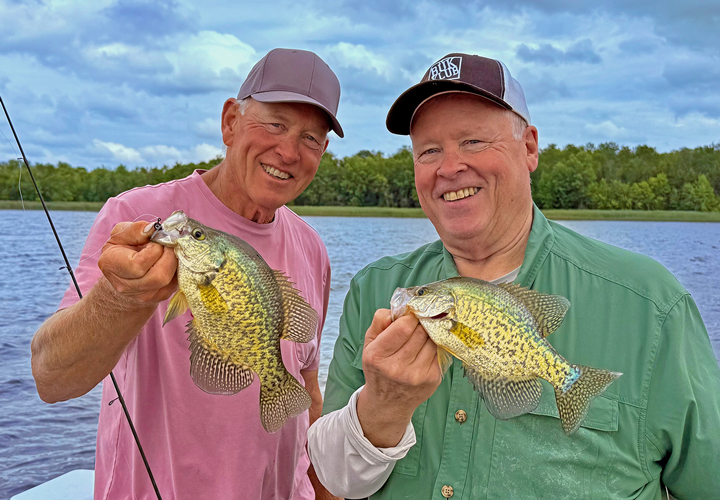 My plan, based partly on my brother’s interest and partly on my need to become more proficient, was to deploy “the gizmo” to locate schools of panfish. I’d use it, I thought, while we trolled the breaklines to watch for a spot, or spots, that we could spot-lock and fish with slip-floats, or casting jigs with plastics. As we moved along the breaklines though, I discovered that crappies, and to a lesser extent sunfish, were not gathered in “schools”. Instead, singles, doubles and small packs of fish were spread horizontally along the drop off.
As we trolled the spinners, tipped with minnows, I and Susan caught an occasional crappie. When I tipped my spinner with a night crawler, sunfish struck instead, and I picked up a couple of keepers, along with some smaller ones that were released. Gary and Cyndee though were not enjoying as much success. As I watched and wondered what we might do to improve the action for them, I remembered fishing with Bob Slager and Joe Banek back in July.
If you recall, or if you’d like to read the (Fishing Report August 5, 2026), I wrote about how the fish were visible on my graph, but instead of being bunched up, they were spread horizontally that day too. The spinners, providing only sporadic action, forced an experiment that worked then and was repeated yesterday. We stopped trolling, put away the spinners and rigged lighter weight rods with 1/8-ounce minnow head jigs. We tipped 2 of the jig heads with Strike King’s Mr. Crappie “Slabalicious” tails and 2 of them with Berkley’s Power Bait twirl tails. The colors were varied and included white, chartreuse, red and lime green.
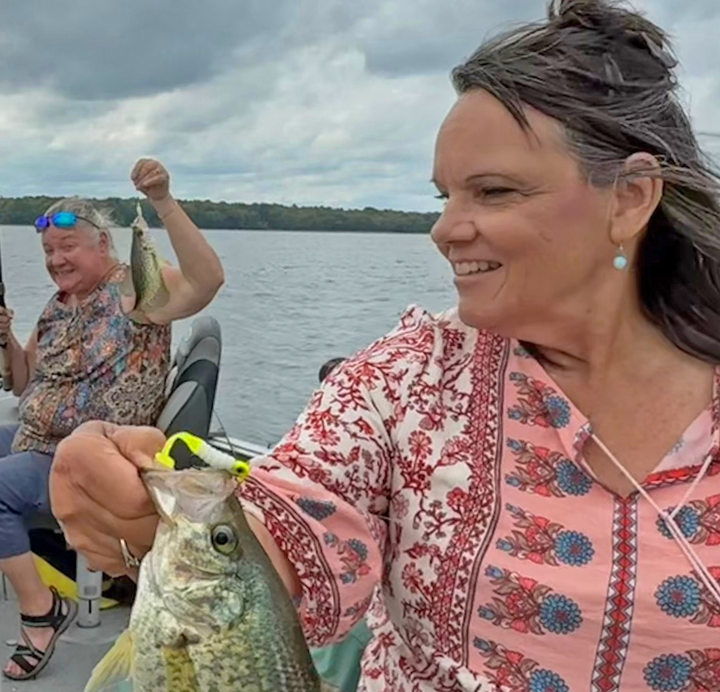 There was a stiff breeze blowing, so we deployed the drift sock and began drifting the breakline. The water depths ranged from 9 to 12 feet, and the structures where I saw fish were steep drop-offs. As we drifted, everybody began picking off fish and the mood became rather cheerful. Even though the packs of fish I observed were small, the attitude of the fish was positive. Most of the fish we encountered struck our lures, it was not uncommon to pick up 2 fish at the same time. All of the colors were working, but the fish on this day showed a preference for the white-chartreuse 2-tone Slabalicious. Whenever somebody needed a new tail, I replaced the old colors with those.
Sunfish did not appear to be located along those steep breaklines, or maybe I should say if they were there, they were not interested in the plastics. We did not experiment with other presentations while the crappies were biting. Later, after we each had harvested 5 crappies, I swung back to an area where I’d picked up those couple of keeper sunfish earlier.
To find the sunfish, we drifted using the same 1/8-ounce jigs but tipped them with cut chunks of night crawlers. It didn’t take that long to find some, and when we did, I spot-locked the boat and we began tight-line fishing.
The water depth was shallow, 5 to 7 feet of water. The weeds, that were not important to the crappies, were essential for catching the bluegills. They were gathered in and around patchy clumps of cabbage and pondweeds. Dropping the jigs over the side and fishing directly below the boat worked fine. So did using clip on bobbers to reach out away from the boat.
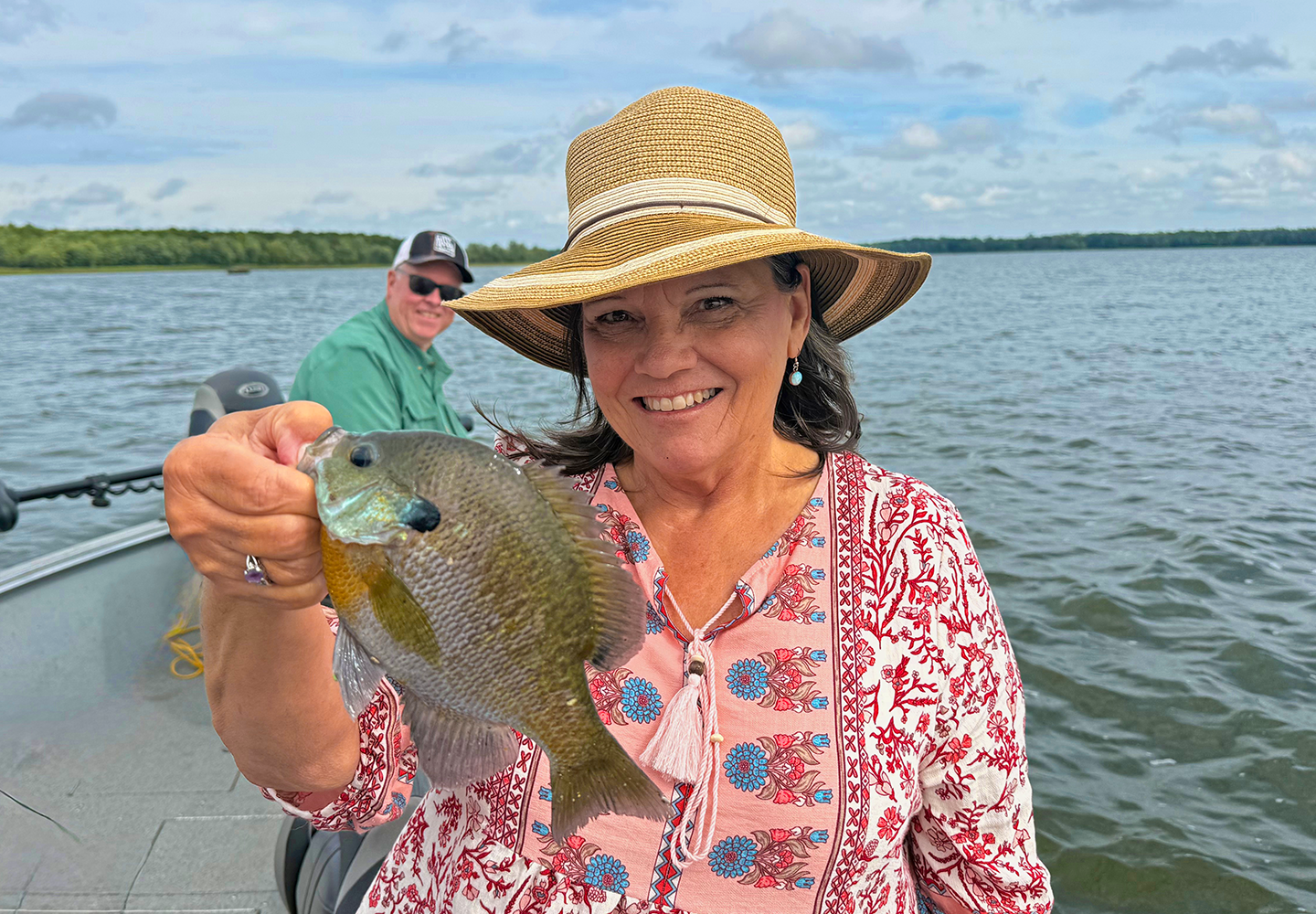 It took a little longer to gather the sunfish, but eventually we each harvest 5 of those too. By now, it was going on 5 PM, and my family had a long drive back to the twin cities ahead of them. So, we headed home, cleaned up the fish and ate a fast supper. My busman’s holiday, successful as it was, had come to an end.
I’m grateful not only for our great day of fishing, but for the whole weekend with our family. We listened to a lot of music and played our guitars a little bit. We chatted about life, enjoyed the campfire and ate way too much food. I think I’ll recover, but whew, that was a lot of living in a short time!
Today, I’m scheduled to fix broken stuff, clean dirty stuff, and catch up on back burner stuff. So, unless I’m wildly efficient, probably won’t be on the lake. Based on what we discovered yesterday, my next few fishing trips will likely be on lakes where I’ve had success during early fall before.
Even though the water remains warm, the fish appear to be migrating into fall locations. As water temperatures cool, we should see an uptick in feeding activity over a wide range of lakes. Of course, you’ll be the first to know what I discover next.  — Jeff Sundin, The Early Bird Fishing Guide Call-Text 218-245-9858 • Email • Facebook • X • Subscribe Insider Newsletter
 Wired2Fish September 8, 2026 "Why You Need to Use Smaller Baits to Catch More Panfish"
 "Summer isn’t over yet, and there’s something about its heat that changes the way I fish for panfish. The water is warm, the weeds are thick, and the biggest bluegills, crappies, and other panfish often aren’t hanging around the same shallow cover where we found them in spring. When the sun gets high and the water temperatures climb, many of these fish slide farther down, suspend over open water, or position themselves around deeper structure. You usually never think of panfish as deep suspending fish — but anything is possible when the water gets hot.
That’s when I reach for some of the smallest baits in my boat. One of the biggest mistakes fishermen make during the summer is throwing baits that are simply too large. Panfish have no problem eating bigger offerings when they ..." Read Full Story >> Why You Need to Use Smaller Baits to Catch More Panfish

September 6, 2026 "A Crappie Example of Locating the Locate-Able"
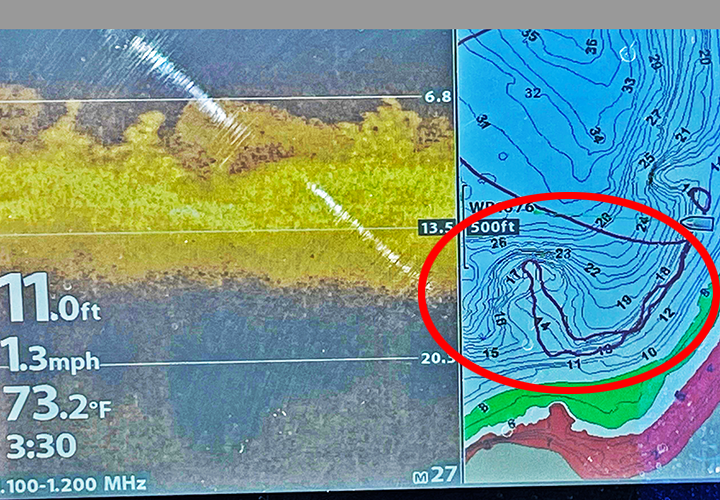 One would believe that after the massive rainstorm that rolled through north central Minnesota on Thursday, crappies might have been forced out of their weedy summertime sanctuaries. That’s what I thought on Friday morning when crappies had seemingly disappeared from areas where we’d caught them earlier this week. Later, I’d discovered that assumption was wrong, but not before I searched the lake high and low hoping to discover where they’d gone.
The storm was a strong one, but not at all typical of most Minnesota thunderstorms. Yes, it rained hard for about a half hour, but the temperature didn’t drop like they usually do. Throughout the episode, air temperatures remained warm. So, by Friday morning, surface water on the lake we fished was still warm, 72 degrees on average. Seeing that, I reasoned that “spinning the weeds” would be the best way to start our fishing trip. Try as a might, crappies could not be coaxed out of the weeds, no matter where I tried to find them.
Sunfish on the other hand were still over the weed tops and considering the weather disruption they were still fairly active. No matter which weed beds we fished, sunnies hammered on our spinners, most often pulling the minnows off our hooks without being hooked themselves. Their level of activity, along with some pike and small bass that struck, made me think that fish were still active, but that the crappies must have moved away from the weeds, and into open water.
I started searching for them in open water located adjacent to weed flats and marked some fish on my graph. We caught a couple of crappies in about 16 feet of water and that encouraged my belief in the alternative plan. Despite that bit of encouragement, trolling the open water was not effective.
Okay, maybe the storm’s passing had sent crappies to the bottom of the lake. They could have been, like they sometimes do, spread out horizontally along the bottom where electronics have trouble registering them? So, we ditched the spinners, rigged up jigging rods and drifted over a portion of the mid-lake basin. Sunfish were out there, and we caught a handful of them, but crappies, if they were there, did not respond to the jigs.
No matter where we fished, no matter what showed up on my electronics, the crappies had seemingly disappeared. By now we’ve tried deep water, medium depth water, structure, mud flats, everything, but the crappies were ghosting us.
“Well, they have to be somewhere, the lake isn’t that big,” I said. “Let’s go back to the beginning and re-start our search in the weeds. By now, it’s nearly 1:00 pm and the sun is peeking out. “I’ll be lucky if I can find them now”, I thought to myself. But the time of day, and the sunshine was not a problem. This time, for reasons known only to the fish, the crappies were in the weeds and they bit. Trolling the same spinners through the same weeds yielded a completely different result than it had a few hours earlier.
I can’t say that the action was gangbusters, but it was good enough. Thanks to the recovery, and a little bit of sorting, we were able to amass about half of the crew’s harvest limits. Added to the sunfish and pike that we’d gathered along the way, the ice chest was heavy and my crew was satisfied.
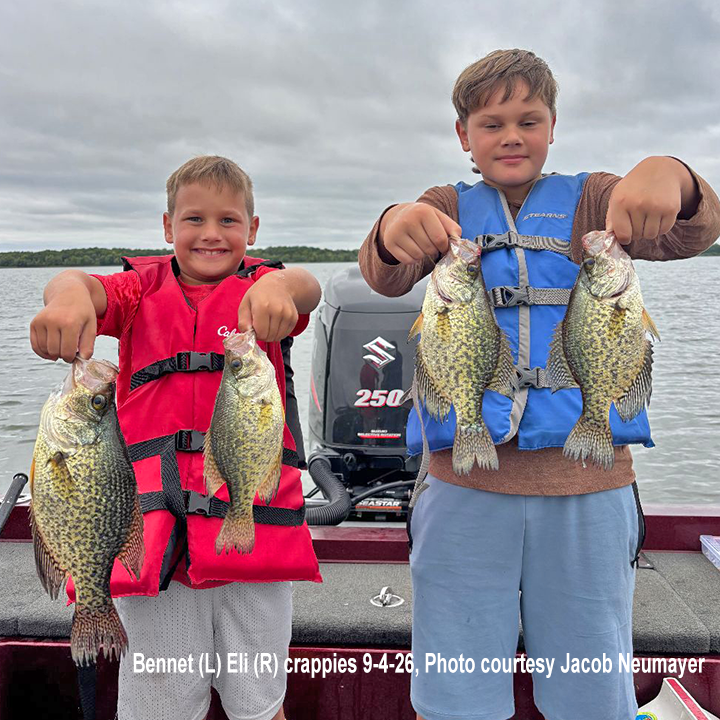 The takeaway was that despite the disruption, crappies refused to abandon their weedy summer haunts. While sunfish scattered and showed up almost everywhere in the water column, crappies simply hunkered down near the same weeds they’ve been using for several weeks. I supposed that hours after the storm, their mood became more aggressive, and they became easier to catch.
It might have become even better later that day. During the evening, I received a text from a friend, Jacob Neumayer who was on a completely different lake. We’d been comparing notes periodically, and he was reporting on the results of his crappie fishing excursion. “It was the perfect bite for the young guns” (pictured right), his text said. For Neumayer, tossing slip floats and jigs to catch the fish worked well. I imagine that an angler trolling spinners there would have caught some fish too.
I suspect that if the storm had delivered a sharp drop in water temperatures, crappies might have evacuated their summer garden spot. Weeds were still green and lush though, and with relatively stable and warm water temperatures, they had no incentive to move out into open water. So, for now, I’ll continue to bank on summer fishing patterns as the first choice for crappies.
The only clue that crappies may be thinking about early fall migrations was the specific locations of the better weed beds we found. Steep breaklines (Image Upper Right), adjacent to deeper water seemed to produce better results than flats with slow tapering breaklines. Inside corners also produced better results than points, or straight line stretches of weed growth.
Like many of you, Labor Day weekend is a family holiday for us. I must admit that it was nice not to worry about fish, where they were, or whether they were biting. That said, the sense of relief won’t last too long because I’ll be back on the lake soon, and as fall approaches, the schedule will be hectic. Today, I have a busman’s’ holiday on tap, not a fishing charter, exactly, but a fishing trip with my own family.
My guess is that we will pursue my favorite fish, sunfish, that should be fun. If you’re heading out on the lake, good luck and be safe. See you in a day or two. — Jeff Sundin, The Early Bird Fishing Guide Call-Text 218-245-9858 • Email • Facebook • X • Subscribe Insider Newsletter
September 2, 2026 "A Fresh Brew of Mixed Mix-Ables"
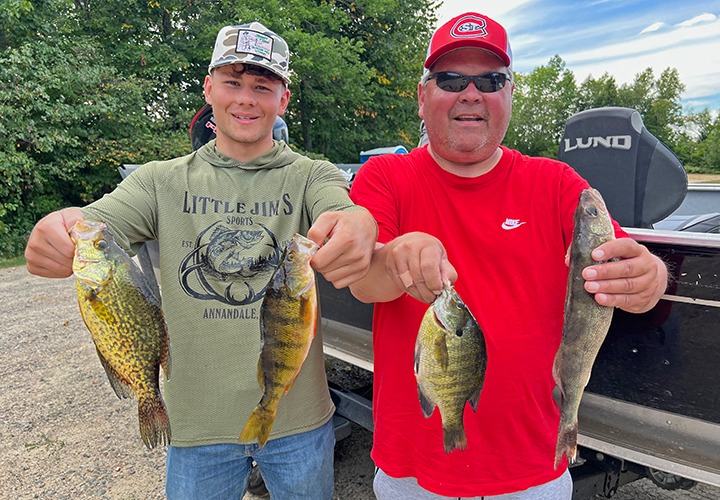 Sometimes it happens so slowly that we barely notice, but when we’re observant, we can detect a change in the mix of fish on a mixed bag fishing trip. Take yesterday for example, I noticed a change in “the mix” on my mixed-bag fishing charter. As the photo left reveals, my crew, CJ and Jack Nilson harvested some beautiful specimens. Even if none of the species were represented in large numbers, those crappie, sunfish, perch and walleye definitely represented a really fun day of fishing.
What triggered the transformation, I think, is the arrival of cooler water temperatures. For the first time in several weeks, the surface temperature of the water dipped below 70 degrees; but not by much. For most of the day, 69.5 to 70 degrees was the range, a 2 degree drop in temperature from the previous day. That may not sound like a huge change, but it’s enough, I think to re-structure the pecking order of fish on the weedlines.
As the waters cool, warm water species like largemouth bass, rock bass and bluegill begin to lose their aggression and the numbers of hyper-active fish diminish. Even though the mix of fish on the weedline doesn’t change, the lower metabolism and diminished activity give cool water species more opportunity. When the panfish and bass bite tapers off, yellow perch, northern pike, crappies, walleyes and other cool water species have more time to find and strike our lures.
At the same time, some of the grasses and submerged plants begin to die off. Filamentous algae, northern milfoil and some other pondweed varieties begin to disappear. As they die off and the habitat “opens up”, fish that feed as the roam, like walleyes and perch, have even more access to baitfish, and our fishing lures too.
Okay, while I do believe that the transformation from summer to fall is beginning, I don’t see any rapid transformation on the horizon for this week. Overnight air temperatures will keep the downward trend going, but warm daytime temperatures will slow the cooling trends. What I’m hoping for, like I always do, is a steady drop in water temps from now until they reach the low 60s. If that happens, we’ll slide into fall with a slow-but-steady increase in fish activity.
 If the weather changes suddenly, and we get a sudden drop in water temperatures, a temporary slowdown in fishing action will likely occur. Setbacks like that usually don’t last more than a few days, but for folks who are only here for those few days, fishing can be difficult. So, let’s combine our efforts and use our powers of persuasion to envision the steady, but controlled slide into fall fishing patterns. Like my wife says, “whenever 2 or more are gathered, the influence of positive thinking can create miracles.”
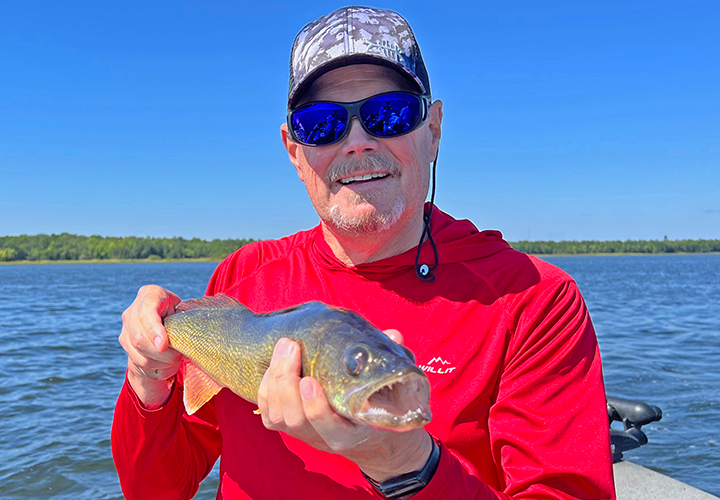
What? You don’t believe in the powers of positive thinking? Seriously, are you kidding me? Ask Rick, the fellow you see pictured here with a nice walleye if he’s becoming a believer. On Monday, Rick started off the day as an antagonist, “I don’t believe in any of that crap”, he said. But during the early afternoon, as we trolled over the weed tops catching crappies, sunfish and bass, Rick said, “With all these beautiful weeds, there JUST HAS TO BE a walleye roaming this breakline”.
Rick was right, within one minute, that nice walleye struck Rick’s spinner and minnow combination. That, my friends, IS the rainbow fish mediation, the Snyder Effect, the power of positive thinking or whatever else you want to call it. It is what happens when we get out of our own way and stop believing that the fish aren’t biting and allow them to come and get us!
Presentations, like they have been for weeks now, continue to favor trolling. For me, and most of the other guides too, spinners are reliable and simple for our customers to use. They can catch fish without having to be highly skilled anglers. That said, most of us are getting anxious to move into fall patterns so we can change our presentations.
For me, jigs and minnows are not just fun, but more relaxing and simpler to manage. Last year, at about this time, I wrote a story about jigging with Eye Candy for a mixed bag of walleyes, perch and pike on Lake Winnie. Right now, I’m champing at the bit to learn whether that presentation will be effective again this fall. As always, you’ll be the first to know if that happens, or if it doesn’t.
As we roll into the Labor Day Weekend, the weather forecast appears to be favorable. Mostly warm, mostly calm, mostly sunny days and cooler nights should keep the current trend going. Walleye lovers should probably focus on early morning and late evening fishing trips. Panfish, bass, perch and pike should continue to inhabit the weed lines, and trolling presentations will remain productive. I’ll be on the water through Friday, so watch for updates to help fine-tune your game plans.
— Jeff Sundin, The Early Bird Fishing Guide Call-Text 218-245-9858 • Email • Facebook • X • Subscribe Insider Newsletter
Wired2Fish September 2, 2026 "What Lures We’re Throwing in September 2026"
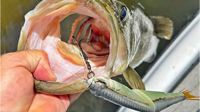 "This is the time of year when the sweltering summer heat finally starts to break. For some of us down south, there’s the slightest indication of this by way of a few cooler mornings and evenings. Further north, there’s a more obvious shift, as hoodies become appropriate outerwear again — at least until the sun gets high in the sky.
Fall is fast approaching, and the fish are starting to pick up on these changes. As water temps start to drop and baitfish begin to migrate, the techniques necessary to catch them will change, as well. So here’s what we’re throwing in September.
While almost everyone has one of these baits tied on at this point, the bass are still biting on ..." Read Full Story >> What Lures We’re Throwing in September 2026
Ely Area, Arrowhead Outdoors Fishing Report September 2, 2026
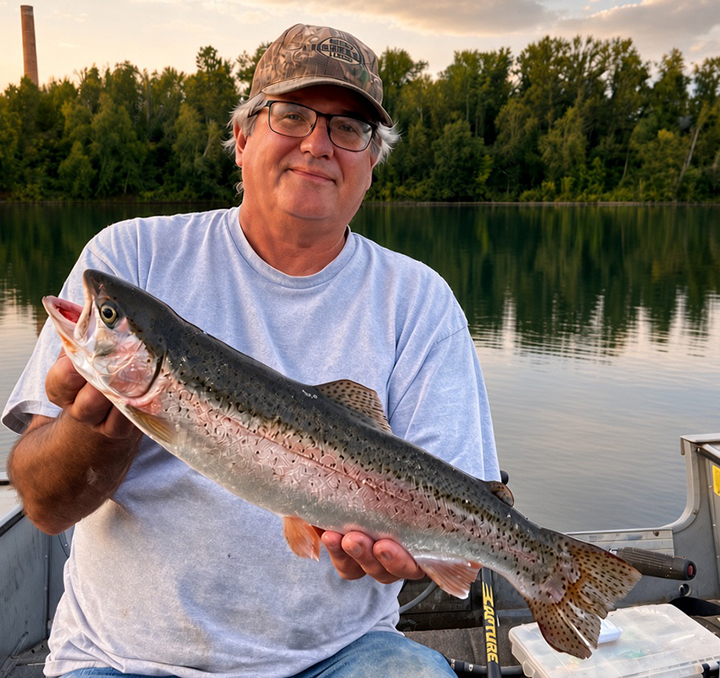 "Walleye fishing reports have changed very little from our last report. With the walleye bite this last week continuing to follow summer patterns in warm water temps in the Ely area.
We really need a week of air temperatures in the 60s to kick start that fall minnow bite. That being said there have been reports of minnow catching walleye, but crawlers still dominate the reports. Anglers continue to report that they are finding their walleyes with either spinner rigs tipped with either a leech or crawler, fishing around sunken islands or trolling small crank baits over flats in that 15 to 30 foot range. Hot colors this last week have been orange, perch and yellow perch.
Smallmouth bass fishing continues to be red hot for bass anglers. Crawfish colored crank baits, paddle tails and Ned rigs have been really hot. Spinnerbaits, in-line spinners, topwater baits and urchin baits have also been catching lots of bass right now. Anglers should continue to look to large flats with large scattered boulders, sunken islands and river mouths.
Crappie anglers continue to report excellent crappie fishing again this last week as these anglers continue to find crappie in weedbeds. As with the last couple of weeks anglers should focus on thicker stands of weeds to find crappies sitting in the shade. Here beetle spins, jig/twister has been very effective. During the last hour of light crappies will start to roam around these same weedbeds looking for food. Again, beetle spins or jigs with twister tails, fished about 1 to 2 feet below the surface have been very effective.
Sunfish are also being found in these same weedbeds. Oftentimes these sunnies are roaming around in the weeds looking for something to eat. Red worms fished under a bobber have been deadly here.
Stream trout fishing reports continue to improve for anglers this last week. Anglers trolling cowbells or leadcore small crankbaits or spoons have been having little issues getting their limit of fresh trout for dinner. 20 feet of water really seems to be the key depth while trolling over 30 to 100 feet of water. Good rule of thumb is the brighter the crankbait the better. Anglers fishing from shore have been having really good luck floating a night crawler under a bobber about 5 to 10 feet down. Cloudy days have been best for daytime bites, but sunset into dark has really been the best time.
Lake trout fishing seemed to have slowed up for many anglers this last week as successful reports were few and far between. Anglers have been finding lakers in 50 to 70 feet of water this last week while trolling with either downriggers or dipsy divers. Large flashy spoons continue to be the baits of choice.
Northern Pike fishing reports have also cooled off some this last week. There were still a small handful of reports of some big pike caught this last week. These anglers were trolling large swimbaits along weedlines, river mouths and over large flats close to deep water. As with the walleyes, a week of the 60s would really help this bite get going." — Arrowhead Outdoors, 218-365-5358
More Recent Fishing Reports
L.O.W Walleyes 9-1 • Brainerd 9-1 • Sundin 8-31 • Cass Lake 8-26 - Hippie Chick 200 • Sundin Crappies 8-20 • Ely MN • 08-19 • Vermilion 08-14 • Winnie 08-11 • Sundin Sunfish 7-26-26 • Goettl History 7-24 • Delicious Bowfin 7-22-26 • Sundin 7-16 • Lake of the Woods 7-16 • Ely MN 7-16 • Winnie 7-14 • Sundin 7-14 • Leech Lake 7-9 • Ely MN 7-8 • L.O.W. 7-8 • Sundin Report 7-1 • Grand Rapids 6-20 •
Follow on X • Follow on Facebook
 Reader Comments September 1, 2026 Gary Korsgaden "When Did Fishing Become More About Us Than the Fish?"
 "I have been thinking about the direction of fishing in Minnesota for some time. After more than six decades on the water, I have watched enormous changes in equipment, technology, fishing pressure, and the way anglers share information. Change isn't necessarily bad. In many ways, it has made fishing more accessible and productive than ever. But I sometimes wonder if we are losing sight of something important: the fishery itself.
The current discussion surrounding the Minnesota DNR's proposal to reduce the statewide walleye limit from six fish to four is a good example. Anglers have every right to question the proposal. They should ask questions, examine the research, and participate in the public process. If they disagree, they should say so. But there is a difference between questioning a fisheries-management decision and dismissing it simply because we don't like the answer.
DNR fisheries professionals have spent years collecting information, studying fish populations, examining harvest and evaluating Minnesota's fisheries. Management decisions should be based on the best available science and what is believed to be in the long-term interest of the resource. So, perhaps the better question isn't simply, "Why should the limit be reduced from six to four?" Perhaps it is: What does the evidence tell us?
There are some questions worth asking.
What problem is the proposed change intended to address? What does the research show about harvest and walleye populations? What benefits (to the angler) is expected by the Minnesota DNR? And how will we know whether the change is accomplishing what it was intended to accomplish?
What concerns me is that fisheries discussions increasingly seem to be influenced by personalities as much as information. Tournament anglers, celebrity fishermen, podcasters, YouTube personalities, and social media creators now have enormous audiences. Some have tremendous fishing knowledge and have earned their reputations through years on the water. Their experiences can be valuable. But popularity and expertise are not the same thing. A person can have thousands of followers and still be wrong about a fisheries-management issue. Likewise, a fisheries biologist may have very little social-media presence and still possess decades of knowledge that should carry considerable weight. We need to be careful not to confuse the two.
T here is another factor worth considering: money. Sponsorships, advertising, tournaments, endorsements and personal brands are now deeply connected to modern fishing. None of these things are inherently wrong. They are part of today's fishing industry. But whenever money and personal interests become connected to an issue, it is reasonable to ask whether those interests can influence the conversation. Are we promoting what is best for the resource, or what generates the most attention?
That is not an accusation against every angler, tournament fisherman or fishing personality. It is simply a question worth asking.
I have seen fishing evolve from a pastime largely passed along through family, friends and local knowledge into an industry driven by technology, competition and social media. Some of that evolution has been remarkable. But with greater influence comes greater responsibility. When an influential angler promotes an opinion, thousands of people may accept it without examining the evidence. When a controversial statement generates hundreds of comments and thousands of views, it can appear more credible simply because it is popular. That is where I believe we need to slow down. Being the loudest voice doesn't make someone right. Having the largest audience doesn't make someone a fisheries expert. And disagreeing with the DNR doesn't automatically mean the agency is wrong.
At the same time, the DNR should never expect anglers to accept every regulation without question. Transparency, good communication and public discussion are essential. That's especially true when something as significant as a statewide walleye limit is being considered. Anglers deserve to know why the change is being proposed, what the data shows and what fisheries professionals believe the long-term consequences will be. And if the science changes, management should change with it. That is what responsible fisheries management should look like.
Those of us who have spent many years on Minnesota's waters also have a responsibility to look beyond our own boats, our favorite lakes and our individual interests. The fishery belongs to all of us. It belongs to the young angler catching his first walleye. It belongs to the family spending a week at a resort in Minnesota. It belongs to the guide making a living on the water. It belongs to the tournament angler and the casual weekend fisherman. And it belongs to the generations that haven't even launched a boat yet.
That is why the four-fish discussion matters beyond two fewer fish in a limit. It forces us to ask what kind of fisheries management we want in Minnesota and whose voices should carry the most weight. Do we want decisions driven primarily by popularity, personalities, and social media pressure? Or do we want decisions driven by sound science, long-term thinking and what is best for the resource?
We can disagree without attacking one another. We can question the DNR without dismissing fisheries science. And we can embrace new technology without forgetting that technology does not replace stewardship.
After more than 60 years of fishing, I don't believe the answer is to turn back the clock. Fishing will continue to change, and it should. But one thing should never change: The fish should come first. If we lose sight of that, then perhaps the bigger question isn't whether Minnesota should have a six-fish or four-fish walleye limit.
Perhaps the bigger question is whether we have forgotten what fishing is really about?"
Brainerd MN Area Fishing Report September 1, 2026
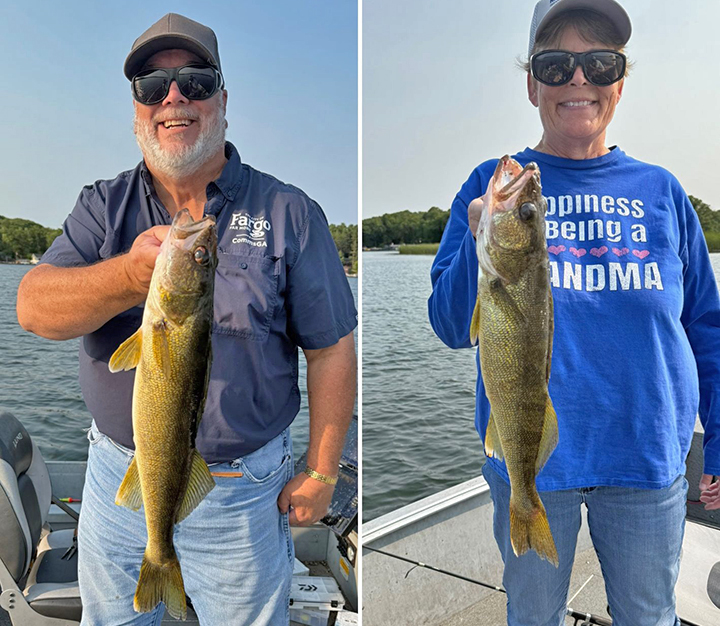 "Water temperatures in the brainerd lakes area have started to drop. Comparing 3 lakes, the water temps were between 71 to 74 degrees and this is a positive turn for fishing.
Walleyes continue to be caught along weed lines using bobbers and crawlers or a jig and crawler. Some fish have slide out to deeper edges where a Lindy rig with a minnow or jigging raps work better. As for me, I have started to experiment with a jig and minnow, so far with limited success. This cool water, jig and minnow bite should begin to pick up over the next couple weeks, especially as water temperatures continue to drop.
Key fishing locations are still weed flats, points, and deep water humps. Staying on the move and working through as many fish as possible until an active pod is located.
Largemouth Bass continue to eat a variety of presentations along deep weed edges too. Musky action has increased significantly as well, with fish chasing bucktails in the weeds. Good luck and tight lines!" — Joe Billiar, Crooked Hat Guide Service • 507-469-2714
Lake of the Woods Fishing Report September 1, 2026
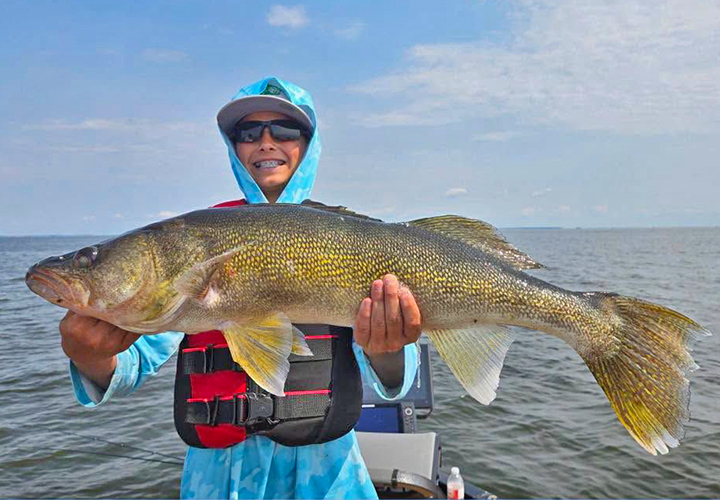 "The fish are still parked over the deep mud, and spinners and crankbaits remain the best options for getting at them. But there's a change in the air: water temps are starting to drop, now sitting in the mid-60s. That cooling trend is the first nudge toward the fall patterns Lake of the Woods anglers look forward to all year. Here's where things stand across the three areas this week.
Big Traverse Bay (South Shore)
The deep-mud bite is still going strong on the south end, and the two go-to presentations continue to deliver. For spinners, pink and firetiger blades have been the ticket. For crankbaits, start with blue/chrome, firetiger, shiny gold, or pink UV firetiger. As always, rotate your colors throughout the day and let the walleyes tell you what they want. Some days they'll show a clear preference, and dialing it in makes a real difference.
Keep an eye on those falling water temps, too. As the lake continues to cool, the fish will gradually shift gears, and it won't be long before the jig bite starts to take over.
Rainy River
The Rainy River is producing a nice mixed bag right now, but the real excitement is what's on the horizon. As water temperatures fall, emerald shiners begin their fall run up the river — and the walleyes follow right behind them. That baitfish migration sets up the epic fall run of walleyes the Rainy River is famous for. It's one of the most anticipated bites of the year, and it's just getting started. If a fall trip is on your radar, the river is the place to keep an eye on.
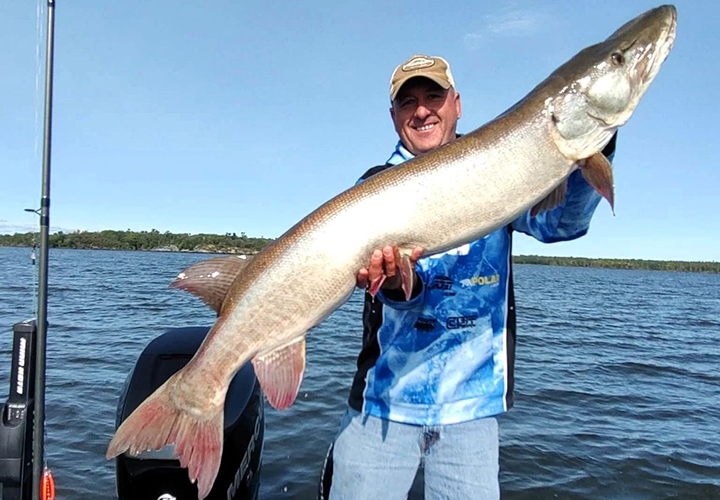 Sturgeon anglers also mark September and October on their calendars as the bite really picks up. Anchor up amongst the beautiful colors, watch the migration happen in front of your eyes and watch that rod tip!
Northwest Angle
Cooler water means things are only heating up at the Angle. Muskie activity typically picks up as fall approaches, and these world-class waters are a fantastic place to chase a giant. Beyond the muskies, some anglers love targeting the big black crappies tucked in among the islands out of the NW Angle, a real treat this time of year. Pike and bass fishing continues to be strong as well, rounding out a multispecies destination that only gets better as the season turns.
Walleye fishing also remains strong. The beauty of the fall up at the Angle is hard to beat.
Looking ahead, September and into October bring a great jig bite across Lake of the Woods, making it one of the best times of the year to make a trip. Cool mornings, comfortable days, and outstanding fishing — it's hard to beat.
A quick reminder on the regulations: the combined walleye and sauger limit is 6 fish total, with up to 4 being walleyes. All walleyes between 19.5 and 28.0 inches must be released immediately, with one walleye over 28.0 inches allowed in your pessession. A 2026 Minnesota fishing license is required.
There's still lots of open-water season left to enjoy. Plan your fall trip, come on up, and make some memories." — Lake of the Woods Tourism, (800) 382-FISH
Wired2Fish August 24, 2026 "Best Trolling Motors for 2026"
 "There ain’t no two ways about it. A good trolling motor lets you slip through the pads quietly or keeps you in place against current or wind, putting your rig in the perfect position to tempt bucketmouth bass, Walter walleyes, and slab crappie.
While smaller craft may rely solely on a trolling motor, larger vessels typically pair a trolling motor with a main outboard engine. The outboard gets you from spot to spot quickly, while the trolling motor lets you maneuver quietly once you arrive. Regardless of your budget, investing in the best trolling motor you can afford will make a huge difference on the water.
The trolling motor market has exploded over the past 10 years. Where two brands once dominated the industry, nearly a dozen manufacturers now produce electric propulsion systems for ..." Read Full Story >> Best Trolling Motors for 2026
Wired2Fish August 2026 "Learning to Use Technology, and Understanding Crappies Better in the Process"
 "Don’t believe that adage about not being able to teach an old dog new tricks. Richard Bowling, a popular fishing guide at Truman Lake in Missouri, is a good example of how wrong that way of thinking can be. Bowling, a longtime guide on Truman Lake in Missouri, uses forward facing sonar to unravel some of the mysteries about crappie behavior.
After more than 30 years of guiding for crappies, he thought he had a good handle on what makes the species tick. Then live scope, which shows the real-time movement of fish, came along in the late 2010s. Even Bowling was amazed at everything he learned after that. Location, Location, Location
If it’s a crappie, it has to relate to brush, flooded timber, or weeds, right? Wrong. That was the old-school way of thinking. But Live scope has since revealed that crappies are quite comfortable living in ..." Read Full Story >> Learning to Use Technology, and Understanding Crappies Better in the Process
You Are Invited To Become A Duly Deputized Fishrapper Cub Reporter Too!
 If you've been waiting for a gold engraved invitation to participate in the daily reports, then stop waiting and consider this your own personal invitation.
Helping your fellow fishermen and women stay abreast of fishing conditions in your area is good for everybody and it's easier than you think! You don't have to write a book, you don't have to share your secret fishing spots and you don't even have to mention your lake. You see, with just a few words about general trends, seasonal patterns or local weather conditions you can help steer your fellow anglers to more gratifying fishing experiences. So, be like Dan and Sean, and become a duly deputized "Cub Reporter", it's good for fishing and that's good for everybody!
Use the Contact Us page, or if you prefer to be "social", use our community page on facebook Fishing Reports Minnesota, that is the Facebook counterpart to this page and it is open to the public, so you can post your own fishing update or just share a photo of a nice catch.